Resources
Training & Professional Development Opportunities
| Title | Day | Date | Time | Location |
|---|---|---|---|---|
Navigating Your Tableau Dashboard | Tuesday | 9/15 | 11-11:45 AM | Cone Center 113B |
Qualtrics 101 | Monday | 9/21 | 2-3:30 PM | Cone Center 113B |
Qualtrics 101 | Wednesday | 9/23 | 9-10:30 AM | Cone Center 113B |
Navigating Your Tableau Dashboard | Thursday | 9/24 | 2:30-3:30 PM | Cone Center 113B |
Qualitative Assessment | Monday | 10/19 | 2-2:30 PM | Student Union 200 |
Qualitative Assessment | Wednesday | 10/21 | 9-10:30 AM | Cone Center 208 |
Qualtrics 102 | Monday | 11/16 | 2-3:30 PM | Cone Center 113B |
Qualtrics 102 | Wednesday | 11/18 | 9-10:30 AM | Cone Center 113B |
Qualtrics 103 | Monday | 11/30 | 2-3:30 PM | Cone Center 113B |
Qualtrics 103 | Wednesday | 12/2 | 9-10:30 AM | Cone Center 113B |
Closing the Loop in Assessment | Monday | 12/14 | 2-3:30 PM | Cone Center 113B |
Closing the Loop in Assessment | Wednesday | 12/16 | 9-10:30 AM | Cone Center 113B |
Project Request Form
If you have any questions as you complete this form or about the approval process, please contact Paul Holliday-Millard via email at paul.holliday-millard@charlotte.edu.
Assessment Toolkit
Assessment is not program review or evaluation. Program review or evaluation uses assessment data as part of a comprehensive evaluation of program or unit.
Assessment is not research. Research seeks to test hypotheses or be generalized to populations outside UNC Charlotte.
So why is assessment important? Schuh (2008) provides us with three essential reasons why assessment is important:
- Quality – assessment helps us improve
- Accountability – assessment helps us document and articulate our value and effectiveness
- Affordability – assessment helps us determine and communicate both our educational and economic value
To facilitate continuous assessment by student affairs educators, we adhere to the Assessment Cycle. This framework guides the development, monitoring, and evaluation of program quality, enabling the identification of strengths and areas for improvement. Ultimately, this process drives program adjustments that enhance student learning.
The Assessment Cycle comprises five distinct phases.
The Assessment Cycle comprises five distinct phases: identifying outcomes, planning ways to measure outcomes, gathering evidence of learning, checking your findings (i.e., analyzing, interpreting, & sharing findings, and acting on your results (i.e., making necessary changes for program improvement). Located at the center of the cycle is the anchor. Before a department measures anything, departments should know why their department exists and who they serve. Every singly phase in the outer circle must directly support and reflect the department’s core mission.
While various forms of assessment exist, this toolkit focuses specifically on outcomes assessment. This method ensures our division's programs and services are constantly evolving to better support student success. Suskie (2009) defines this continuous process as:
"...the ongoing process of establishing clear, measurable expected outcomes of student learning; ensuring that students have sufficient opportunities to achieve those outcomes; systematically gathering, analyzing, and interpreting evidence to determine how well student learning matches our expectations; using the resulting information to understand and improve student learning." (p. 4)
While our primary focus is on student learning, the toolkit also recognizes the other distinct types of assessment that support our division's success:
- Tracking usage: Measures service utilization, program frequency, and overall student participation across campus. Examples include monitoring hourly student traffic in dining halls or logging the total number of residence hall events hosted each semester.
- Needs assessment: Identifies the specific resources students require to succeed, enabling institutions to deliver targeted support across campus. Examples include evaluating mental health demands among graduate students and student-athletes, or determining childcare, flexible facility hours, and study space needs for student-parents and adult learners.
- Satisfaction: Focuses on measuring overall satisfaction among key campus groups. Examples include assessing student satisfaction with residence halls or gauging parent experiences during orientation.
- Outcomes assessment: Measures specific intended outcomes, which typically focus on student learning and growth, though they may also evaluate broader program effectiveness. Examples include assessing leadership skills gained through a coursework module or tracking campus alcohol consumption following a policy update.
- Benchmarking: Measures progress by comparing data against external peers, professional benchmarks, or historical trends. For instance, an institution might participate in the EBI Housing & Residence Life study, audit staffing ratios against comparable schools, or evaluate Career Services against NACE standards.
- Program review: Rather than focusing on a one-off program, this evaluates a full unit's overall operations (for example, a Housing & Residential Life office or Student Involvement). It usually draws on multiple assessment types listed above.
- Program evaluation: The process of assessing the merit and worth of an entity, making it the preferred term for judging a program. Ultimately, program evaluation systematically seeks to answer questions and reach conclusions that are of key importance to the client.
- Strategic Planning: This allows us to assess where we are today and establish strategic priorities for the near future, like outlining five main goals or priorities for the 5–10 years.
(Alkin & Vo, 2018; Henning, 2009)
In student affairs, it's crucial to define what we want students to gain from their experiences before we design how we will measure those gains. Clearly written objectives and student learning outcomes act like a roadmap, ensuring our assessments accurately capture the skills, knowledge, and attitudes we aim to develop in students. For example, if we want students to improve their leadership skills, we need to define what "improved leadership" looks like before we try to assess it. This not only helps us create relevant assessments but also guides the design of our programs and services, making sure they are actually helping students achieve those desired outcomes. It keeps everything we do focused and intentional, maximizing our impact on student development.
- Assessment Key Terms and Definitions
- What are Student Learning Outcomes?
- The Need for Program Theory and Implementation Fidelity in Student Affairs Assessment
- Student Learning Outcomes in Student Affairs
- Characteristics of Student Learning Outcomes
- Student-Centered Assessment Checklist
- Writing Student Learning Outcomes via the ABCD method
- Launching and Sustaining Assessment Plans & Projects
- What are Operational Outcomes?
- Departmental Strategist
In student affairs assessment, it's essential to carefully align what we want students to learn (outcomes) with how we measure that learning (measures). This ensures the data we collect actually tells us if students are developing the intended skills and behaviors. By directly connecting outcomes to assessment tools, we get a clear picture of our programs' effectiveness, allowing us to make informed decisions about how to improve them and ultimately better support student success.
Before any analysis or interpretation can occur, it is essential to: Gather Evidence of Learning (i.e., data & information). This crucial step involves collecting relevant data and information to understand student outcomes.
- Survey Checklist
- Survey Fatigue
- Focus Groups
- Rubrics Uncovered: Everything You Need to Know
- Advantages & Disadvantages of Rubrics
Analysis and interpretation turn raw data into actionable insights, revealing patterns in student learning and program effectiveness. This allows student affairs professionals to understand why results occur and make data-driven decisions that enhance student success.
- Student Learning Outcomes aligned with Appropriate Analyses
- Inductive vs Deductive Approaches to Qualitative Assessment
- Coding Checklist
- How to break down your data using Excel
Acting on your results or "Closing the loop" is a key concept in student affairs assessment, referring to the process of using data to inform and improve practice. It means that after collecting and analyzing assessment data, the insights gained are used to make informed decisions moving forward. This is crucial because assessment should always be a tool for continuous improvement. By closing the loop, student affairs educators can enhance student learning, strengthen programs and services, inform planning and budgeting, contribute to student and staff success, and ultimately improve retention and graduation rates, while also supporting successful accreditation and program reviews.
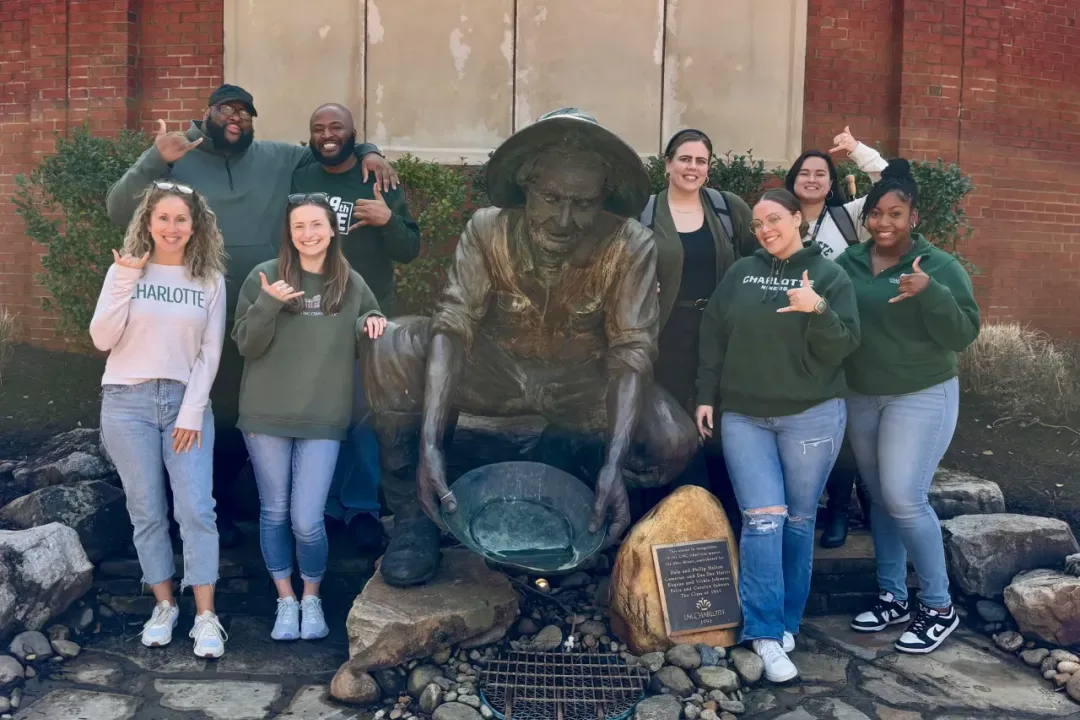
Certified Assessment Champions is a professional development program designed to provide foundational assessment skills to staff at UNC Charlotte. This flexible, self-paced hybrid program combines asynchronous Canvas modules with in-person workshops.
Participants will learn essential assessment concepts, including:
- Writing effective objectives and learning outcomes
- Choosing the right methodology
- Basics of survey design and building them in Qualtrics
- A primer on qualitative assessment
- Using results to inform programs and services
- Leveraging Qualtrics for data analysis
Upon completion of the program, you will be able to confidently measure and evaluate the success of programs and services in your department.
To gain access to the Canvas modules, please complete the registration form linked below. For the in-person workshops, you can register for them via Niner Engage. In-person workshops are offered year-round.
Asynchronous
- What is Assessment?
- Objectives and Outcomes
- Planning and Data Collection
- Analyzing Data and Sharing Results
In-Person
- Qualtrics I (Getting Started in Qualtrics & Basic Surveys)
- Qualtrics II (Basic Analysis & Data Disaggregation)
- Qualtrics III (Results Dashboard & Reports)
- Qualitative Assessment
- "Closing the Loop" in Assessment
If you have any questions or concerns, please don't hesitate to contact Paul Holliday-Millard at paul.holliday-millard@charlotte.edu.
To enhance assessment efforts within the Division of Student Affairs, we support Qualtrics, a sophisticated survey tool designed to improve the efficiency, accuracy, and utility of program assessment. Qualtrics offers robust data collection and analysis features, enabling you to gather valuable insights and streamline your assessment processes. To access your Qualtrics account, go to qualtrics.charlotte.edu. Feel free to review OneIT's FAQs on how to log into Qualtrics. If you are experiencing any issues, you will need to submit a help ticket to OneIT.
To support departments in survey creation, SARA offers three workshops: Qualtrics 101, Qualtrics 102, and Qualtrics 103. Qualtrics 101 is an introductory workshop that instructs participants on how to effectively construct and organize surveys, create questions, publish, and administer surveys. Qualtrics 102 shows users how they can use the data and analysis tools to perform basic quantitative and qualitative analysis. Qualtrics 103 helps to guide users in to how to effectively use results dashboards and reports to communicate their data. These workshops are offered year-round and we also provide copies of the presentations below. Additionally, Qualtrics offers a robust support page with linked articles and how-tos of how to use the survey platform efficiently and effectively. If you have any questions or concerns, please feel free to reach out to paul.holliday-millard@charlotte.edu.
To register for one of these workshops, please follow this link. Once there, sign in by selecting the Sign In icon located at the top right corner of the website. To log in to Niner Engage, you only need access to NinerNet credentials, as the platform uses our University’s SSO.
Complementing Qualtrics, UNC Charlotte utilizes Anthology’s Engage product (known on campus as Niner Engage). Niner Engage serves as a comprehensive hub for campus events, resources, departments, programs, and student organizations. Beyond its general functionality, which allows students to discover organizations and programming aligned with their interests, and enables faculty and staff to promote offerings and gather data like service hours and event attendance via the forms tool, Niner Engage also provides a suite of tools that can further refine and enrich your assessment strategies.
This platform offers additional capabilities to support your assessment work. Please take a moment to review the video resources below and learn how to effectively utilize Niner Engage for both general campus engagement and targeted assessment initiatives.
The Student Leader Initiative provides a universal method and tool for staff throughout the UNC Charlotte Division of Student Affairs to use with student leaders in student organizations, programs, or activities to help in the assessment and documentation of enhanced learning and skill development in relation to the students' leadership experiences. The method and tool to inform this initiative was designed for broad participation of student affairs organization advisors, mentors, supervisors and others who work closely with student leaders.
The Student Leader Initiative provides a direct alignment with the Division of Student Affairs Strategic Plan 2022-2027: Part A: Expand high-impact learning practices to strengthen academic and co-curricular development through access to mentoring, developing career competencies, and engaged learning. Using the National Association of Colleges and Employers (NACE) competencies and connecting to the Council for the Advancement of Standards (CAS) Learning and Developmental outcome domains and dimensions as a guide, the following learning outcomes were developed to inform this Divisional Student Leader Initiative. Student leaders engaged with the UNC Charlotte Division of Student Affairs organizations, programs, and/or activities will hold these qualities:
Problem Solving:
- Demonstrate effective critical thinking, reflective thinking, and effective reasoning skills as they work through important problems, questions, and issues.
Career Management:
- Demonstrate realistic self-appraisal, self-understanding, and self-respect through the exhibition of personal growth and development.
- Ability to articulate relevant skills, strengths, knowledge and experiences to potential employers.
Teamwork/Collaboration:
- Establish meaningful relationships, work cooperatively with others, and demonstrate skills in guiding and assisting groups in meeting common goals.
Professionalism/Work Ethic:
- Show professionalism through the demonstration of effective communication, initiative and continuous improvement of one's work and one's work environment.
Wellness:
- Engagement in and maintenance of a healthy relationship between health and wellness in accomplishing goals.
STUDENT LEADERS: IN THEIR OWN WORDS
In order to assess the achievement of these learning outcomes identified above, the Division of Student Affairs Student Leader Rubric was developed. The rubric is intended to be used as a direct assessment method in which the student leader and at least one observer who works closely with the student leader (e.g., advisor, mentor, supervisor, etc.) completes the rubric on the student's behalf. It is recommended that the rubric be completed using a pre-post method and utilized as a formative assessment type in order to ensure the most meaningful assessment of leadership skill development of student leaders.
Results from this assessment should be used to guide mentoring/advising/supervision related activities with student leaders. Results will be aggregated and analyzed on an annual schedule by Student Affairs Research & Assessment (SARA) to inform the above referenced SLOs at the divisional level. If you have any questions about this initiative, please contact Dr. Jordan Bullington-Miller or Dr. Ellissa Brooks Nelson.
Getting Started with the Divisional Student Leader Initiative:
This short training video provides an overview of the Divisional Student Leader Initiative and what to expect throughout the assessment process. We’ll walk through the initiative timeline, explain how and when data are collected, and introduce the assessment tools and resources available to support your work.
Most importantly, this process is designed to be formative. The goal is not simply to collect ratings, but to use the results to support meaningful coaching conversations with student leaders, celebrate their growth, and identify opportunities for continued development throughout their leadership experience.